
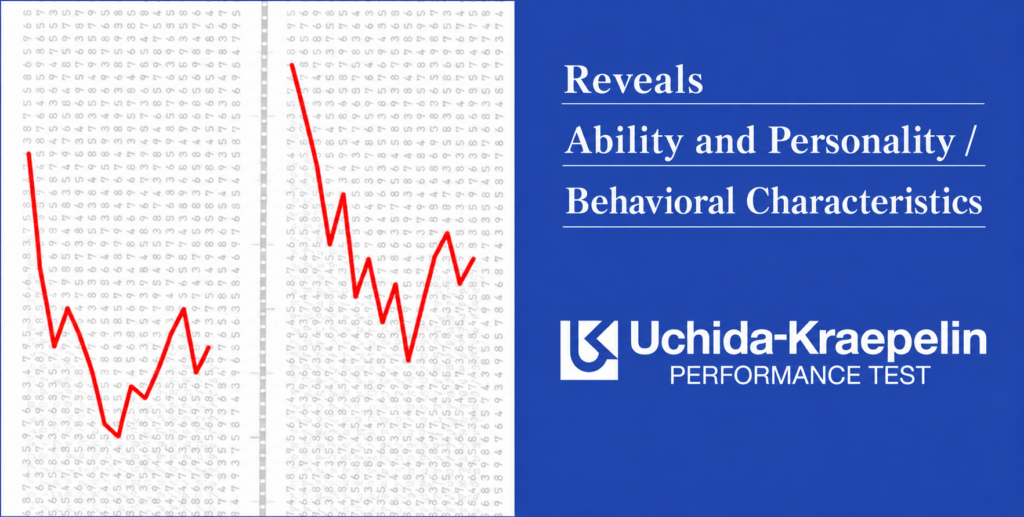
Cannot sustain concentration?
Is 90 minutes the limit?
How can you improve concentration?
Information about concentration is everywhere these days.
If you feel you have a problem concentrating, there seem to be many possible approaches. But the approaches that work will probably differ according to personality.
This column considers personality in relation to concentration through the Uchida-Kraepelin Test.
First, what is concentration?
The Japanese dictionary Kōjien defines concentration as the power to sustain awareness or attention directed toward a particular thing.
Looking up the word for “power” gives several meanings, including “② spirit, mental strength, perseverance, mental energy” and “③ ability, capacity, competence.”
For this column, let us therefore define concentration as “the mental strength, perseverance, or ability to sustain awareness or attention directed toward a particular thing.”
Does concentrating require effort?
To someone who thinks, “I cannot concentrate even when I try,” or “I lose concentration straight away,” effort may seem essential to concentration.
However, examining many Uchida-Kraepelin Test sheets reveals quite a few people who appear to enter or maintain a focused state naturally. So effort does not seem to be essential in every case.
For example, among the five traits related to behavior and personality shown in the Uchida-Kraepelin Test Judgment, people with low Sensitivity (often also with low Flexibility) are frequently observed to show the following tendencies in everyday behavior.
- When expressed as a merit, they are calm and composed in their actions. Their mood varies little, and they deliver stable performance.
- When expressed as a demerit, they cannot readily adjust their pace flexibly to surrounding circumstances. They may give an impression of indifference or limited receptiveness.
A mechanism of “becoming focused without being aware of it” seems to underlie these tendencies.
One possible explanation of the clinical observations above would be as follows.
- As a merit, becoming focused unconsciously may make their actions calm and composed. The same unconscious focus may explain both the limited variation in mood and their stable performance.
- As a demerit, becoming focused unconsciously may make it difficult to adjust their pace flexibly to surrounding circumstances. It may also explain why they sometimes appear indifferent or less receptive.
People of this type do not seem to need effort to maintain a focused state.
That may sound enviable to those who feel they cannot concentrate. Yet looking at the demerits reveals another side.
Effort is needed when switching between states of concentration
The demerits above suggest that people who become focused unconsciously find it difficult to deliberately disengage or to redirect their focus to what is required. They may be less skilled at doing so, or may not feel inclined to do so.
In other words, just as someone who has difficulty concentrating needs effort to focus, someone who becomes focused unconsciously may need effort to come out of that state.
| Unconsciously focused | ||
| ↗↙ | The transitions that require effort differ from person to person. | ↖↘ |
| Not focused | ↔ | Deliberately focused |
The tendency to become focused unconsciously is also seen in people with low Adaptability and high Resistance—in other words, those whose working curve rises toward the right.
However, the way concentration develops differs between people with low Sensitivity and those with a rising working curve.
People with low Sensitivity are often naturally focused in everyday life. In contrast, those with a rising working curve tend to become more and more focused as time passes after starting something. Becoming absorbed, engrossed, or single-minded may be a clearer description.
People with medium to high Adaptability tend to find it easier to enter a deliberately focused state. The Uchida-Kraepelin Test has two 15-minute working periods separated by a break. For many examinees, workload is highest during the first one to three minutes of both halves.
This is attributed to volitional tension: deliberate concentration is directly reflected in an increase in workload.
However, the higher Adaptability is, the larger the difference between the initial workload and the workload thereafter tends to become. Workload visibly falls over time, suggesting that concentration may not be sustained for very long.
People with high Flexibility also seem able to concentrate deliberately when they are in good condition. Because their mental state changes readily, however, they may find it difficult to do so consistently.
Just as focused states appear to include both unconscious and deliberate focus, unfocused states also seem to include two forms: being relaxed and being oversensitive.
People with high Adaptability or Flexibility seem to relax naturally when their concentration ends.
People with high Sensitivity are often in an oversensitive state in everyday life. This could be described as not concentrating on one particular thing while maintaining tension in readiness for unexpected events. That may explain why they are often described as observant at work or school.
Where to direct effort, according to type
The following advice for concentrating efficiently by type is based on the discussion above.
Adaptability × Flexibility × Sensitivity × Resistance appear in combination.
Understanding your own type, or those of your staff and team members, may help you manage concentration more effectively.
| Low trend | High trend | |
|---|---|---|
| Adaptability | 
Changing the current state is difficult. |

You tend to be good at concentrating deliberately. |
| Low trend | High trend | |
| Flexibility | 
You are often already focused on a state you like, and find it hard to change your frame of mind. |

Performance tends to vary according to whether you are in good or poor condition. |
| Sensitivity | 
Something tends to be on your mind all the time. |
|
| Low trend | High trend | |
| Resistance | 
Concentration and motivation tend to fall as time passes. |

You tend to be slow to get started, but once you begin, you may also find it hard to stop. Put effort into making a start. |
To arrange the Uchida-Kraepelin Test, a work-based aptitude and personality test that can be used in the same way in Japan and overseas, please contact your nearest distributor in your country or region.
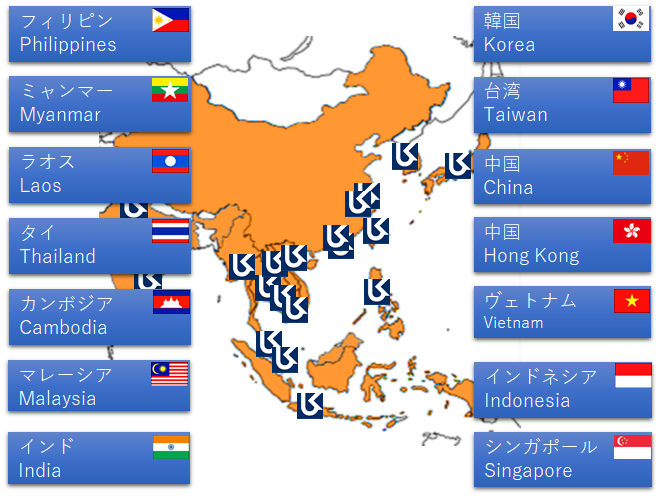
Distributors in East Asia
- South Korea
- Korea Management Association
- Main areas served: Seoul, Daegu, Busan, Gwangju, Jeju
- Other services available alongside the Uchida-Kraepelin Test: Management consulting
- Languages supported: Korean
- Korea Management Association
- Mainland China
- Shanghai Oracle Bay Enterprise Group, Co., Ltd.
- Main areas served: Shanghai, Nanjing, Suzhou, Wuxi, Changzhou, Zhenjiang, Yancheng, Nantong, Nanning, Ningbo, Bengbu, Xining, Yinchuan
- Other services available alongside the Uchida-Kraepelin Test: Human resource development
- Languages supported: Chinese
- NINGBO NAPU TRADE CO., LTD.
- Main areas served: Ningbo, Shanghai, Shenzhen, Dongguan
- Other services available alongside the Uchida-Kraepelin Test: Manufacturing consulting, Fabless manufacturing
- Languages supported: Chinese, Japanese
- Shanghai Oracle Bay Enterprise Group, Co., Ltd.
- Hong Kong
- N-ERVE TECHNOLOGY
- Main areas served: Hong Kong
- Other services available alongside the Uchida-Kraepelin Test: Manufacturing consulting, Fabless manufacturing, Recruitment
- Languages supported: Japanese, Chinese
- N-ERVE TECHNOLOGY
- Taiwan
- Pasona Taiwan
- Main areas served: Taipei, Hsinchu, Kaohsiung
- Other services available alongside the Uchida-Kraepelin Test: HR consulting, Human resource development, Recruitment
- Languages supported: Japanese, Chinese
- Pasona Taiwan
Distributors in Southeast Asia
- Thailand
- Krung Asia Insight
- Main areas served: Bangkok, nationwide Thailand
- Other services available alongside the Uchida-Kraepelin Test: Thailand market entry consulting
- Languages supported: Thai, Japanese
- Waguri
- Main areas served: Bangkok, Chon Buri, Rayong, Nakhon Ratchasima, Chiang Mai, Lamphun
- Other services available alongside the Uchida-Kraepelin Test: HR consulting
- Languages supported: Japanese
- Pasona HR Consulting Recruitment (Thailand)
- Main areas served: Bangkok
- Other services available alongside the Uchida-Kraepelin Test: Recruitment, HR consulting
- Languages supported: Japanese, Thai
- TRAINING AND SEMINAR KOTSUKOTSU
- Main areas served: Bangkok
- Other services available alongside the Uchida-Kraepelin Test: Human resource development, Recruitment
- Languages supported: Japanese, Thai
- Krung Asia Insight
- Vietnam
- Kosaido HR Vietnam
- Main areas served: Hanoi (on-site visits available for Ho Chi Minh City, Da Nang and other locations)
- Other services available alongside the Uchida-Kraepelin Test: Recruitment, Human resource development, Vietnam market entry consulting
- Languages supported: Japanese, Vietnamese
- Success Partner
- Main areas served: Ho Chi Minh City, Hanoi
- Other services available alongside the Uchida-Kraepelin Test: Organizational development
- Languages supported: Vietnamese
- Kosaido HR Vietnam
- Myanmar
- J-SAT CONSULTING
- Main areas served: Yangon, Mandalay
- Other services available alongside the Uchida-Kraepelin Test: Recruitment, Myanmar market entry consulting, Japanese language education
- Languages supported: Japanese, Burmese
- J-SAT CONSULTING
- Cambodia
- Creative Diamond Links
- Main areas served: Phnom Penh
- Other services available alongside the Uchida-Kraepelin Test: Recruitment
- Languages supported: Japanese, Khmer
- Creative Diamond Links
- Malaysia
- Pasona HR MALAYSIA
- Main areas served: Kuala Lumpur
- Other services available alongside the Uchida-Kraepelin Test: Recruitment
- Languages supported: Japanese, Malay, English
- Pasona HR MALAYSIA
- Laos
- Lao-Japan Gateway
- Main areas served: Vientiane
- Other services available alongside the Uchida-Kraepelin Test: Cybozu Kintone, Laos market entry consulting
- Languages supported: Japanese, Lao
- Lao-Japan Gateway
- Indonesia
- Bruggen Batavia Indonesia
- Main areas served: Jakarta, Bekasi
- Other services available alongside the Uchida-Kraepelin Test: HR consulting, Legal consulting, Visa consulting
- Languages supported: Japanese, Indonesian, English
- Japan Asia Consultants
- Main areas served: Jakarta, Bekasi
- Other services available alongside the Uchida-Kraepelin Test: Indonesia market entry and company incorporation, Accounting and bookkeeping, Tax services, Labor affairs, Legal services, Visa services
- Languages supported: Japanese, Indonesian, English
- Bruggen Batavia Indonesia
- Philippines
- One World Human Resources Development
- Main areas served: Manila, Quezon
- Other services available alongside the Uchida-Kraepelin Test: Japanese language education, Human resource development
- Languages supported: Japanese, Tagalog, English
- One World Human Resources Development
- Singapore
- Pasona Singapore
- Main areas served: Singapore
- Other services available alongside the Uchida-Kraepelin Test: Recruitment, HR consulting
- Languages supported: English
- Pasona Singapore
Distributors in South Asia
- India
- Pasona India
- Main areas served: Delhi, Gurugram, Chennai, Bengaluru
- Other services available alongside the Uchida-Kraepelin Test: Recruitment
- Languages supported: Japanese, Hindi, English
- Pasona India
If you cannot find a nearby distributor or would like to arrange testing in multiple regions, please contact us using the contact form.