
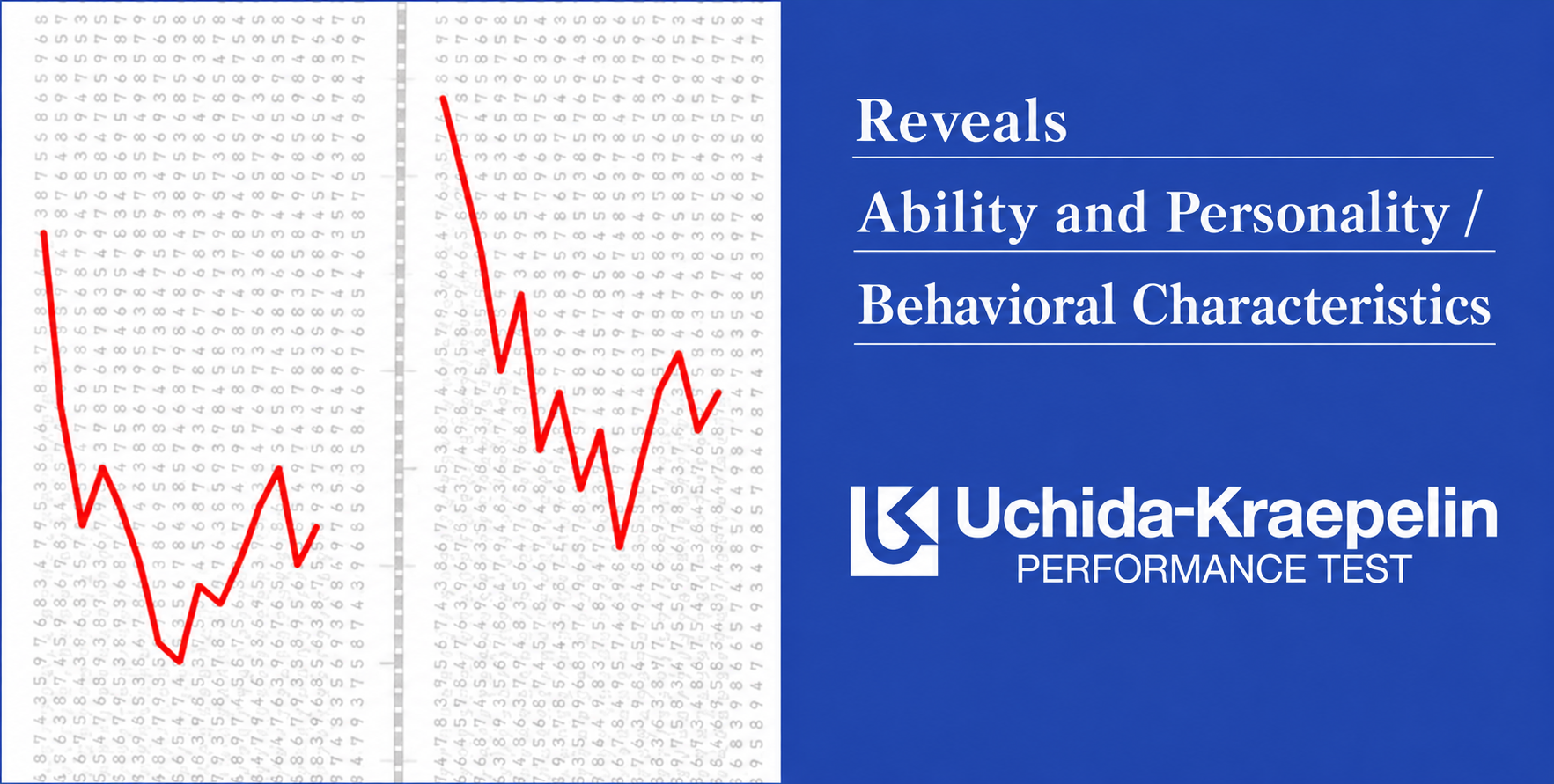
The results of the Uchida-Kraepelin Test do not include criteria that label a person as having passed or failed.
They show tendencies in ability as reflected in workload, and personality and behavioral characteristics as reflected in the work curve.
When using the test for selection or placing the right person in the right role, the administering organization decides what makes someone suitable and sets pass criteria or placement standards according to its own circumstances and objectives.
- Is the combination of workload and personality and behavioral characteristics appropriate for the assigned work?
- Is that combination appropriate for the assigned position?
- Is that combination appropriate in relation to the existing team members?
- Is that combination appropriate for the role expected in the future?
Trying to decide whether someone passes or fails, or where they fit best, from that person’s evaluation results alone makes mismatches more likely, which in turn can lead to personal and organizational problems.
The original Japanese evaluation sample is retained below. The translated panels correspond to explanations 1–4 in the sample.

These criteria are not fixed. Even after setting initial standards, it is necessary to keep reviewing whether they are optimal.
Retain the test sheets and evaluation results. When opportunities arise, compare the results with observations of the person’s actual behavior and performance. This is a useful way to understand suitable placement.
Each distributor asks about the customer’s individual circumstances and offers advice on effective use, drawing on previous cases.