
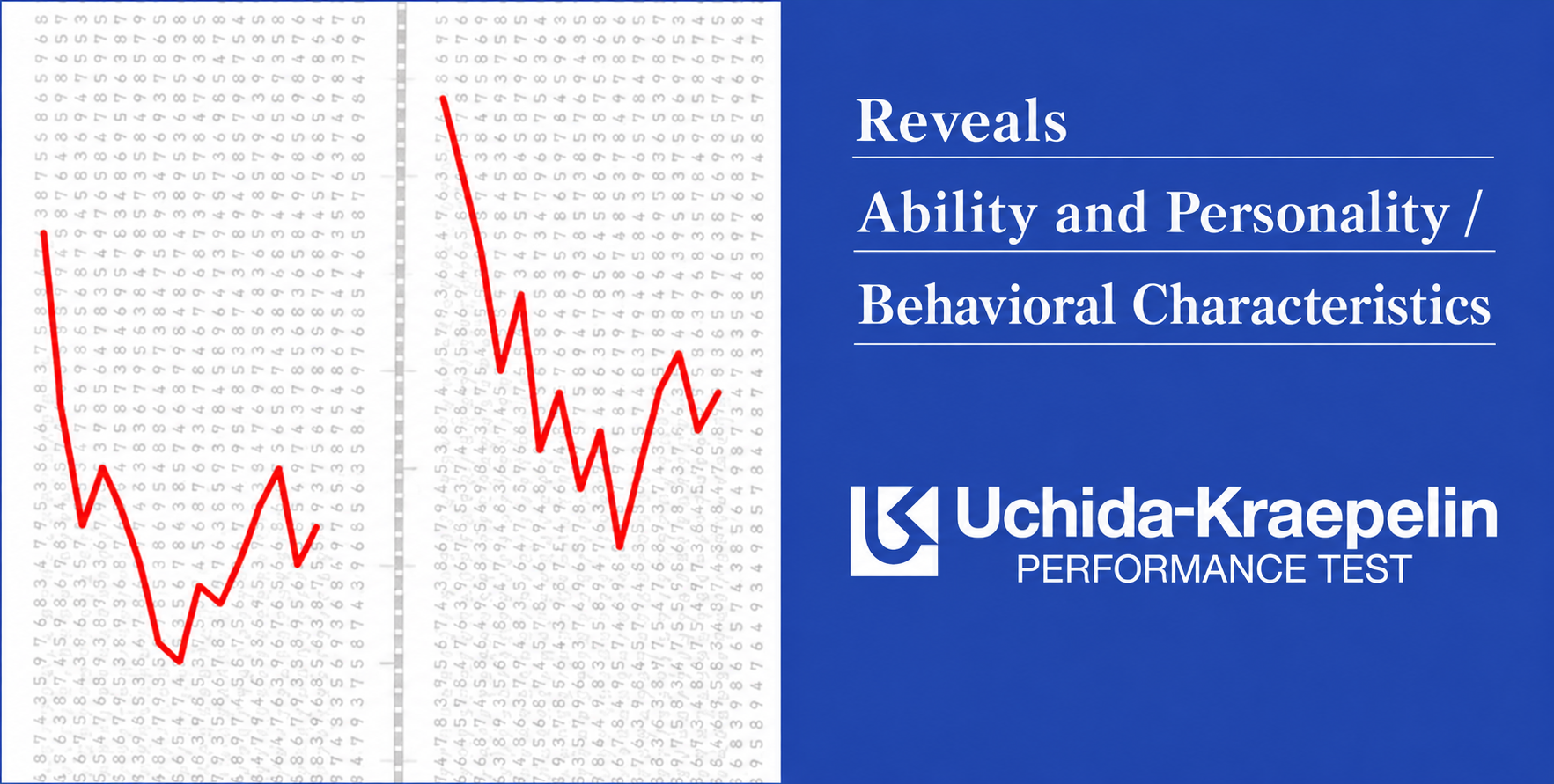
Including the instructions, the Uchida-Kraepelin Test takes about 50 minutes. After a one-minute practice, examinees perform continuous one-digit addition for 15 minutes, take a five-minute break, and then perform another 15 minutes of addition. They move to the next row every minute.
The German physician and psychiatrist Emil Kraepelin (February 15, 1856–October 7, 1926) used various continuous addition tasks based on a five-minute method to study how different conditions affected workload and the course of work. These conditions included alcohol, caffeine, sadness, distraction, depressive states, emotional excitement, tension, the effects of practice, the relationship between practice and fatigue, the limits of practice effects, differences between morning and afternoon work, differences between daytime and nighttime workers, and reduced performance after meals. He also identified five factors thought to determine the course of work: tension, excitement, habituation, practice, and fatigue. These findings were presented as the work curve in the research journal he directed, Psychologische Arbeiten (Psychological Studies).
The Japanese psychologist Yuzaburo Uchida (December 15, 1894–November 18, 1966), while investigating Kraepelin’s work curves, discovered a standard working pattern through various trials using a 25-minute method: 15 minutes of work, a five-minute break, and 10 minutes of work. He developed the Uchida-Kraepelin Test on this basis.
The Uchida-Kraepelin Test was first introduced into clinical psychiatry in Japan. By analyzing deviations between the standard working pattern and an examinee’s work curve, it became established as a method for diagnosing disorders of volition.
Even today, the Uchida-Kraepelin Test administered in Japanese medical institutions is covered by health insurance under medical fee category D285-2.
Further research and verification led to the present 30-minute format—15 minutes of work, a five-minute break, and another 15 minutes of work. Beyond diagnosing disorders of volition, the test came to be widely used to estimate the general characteristics of an examinee’s work behavior and continues to be used in this way.